
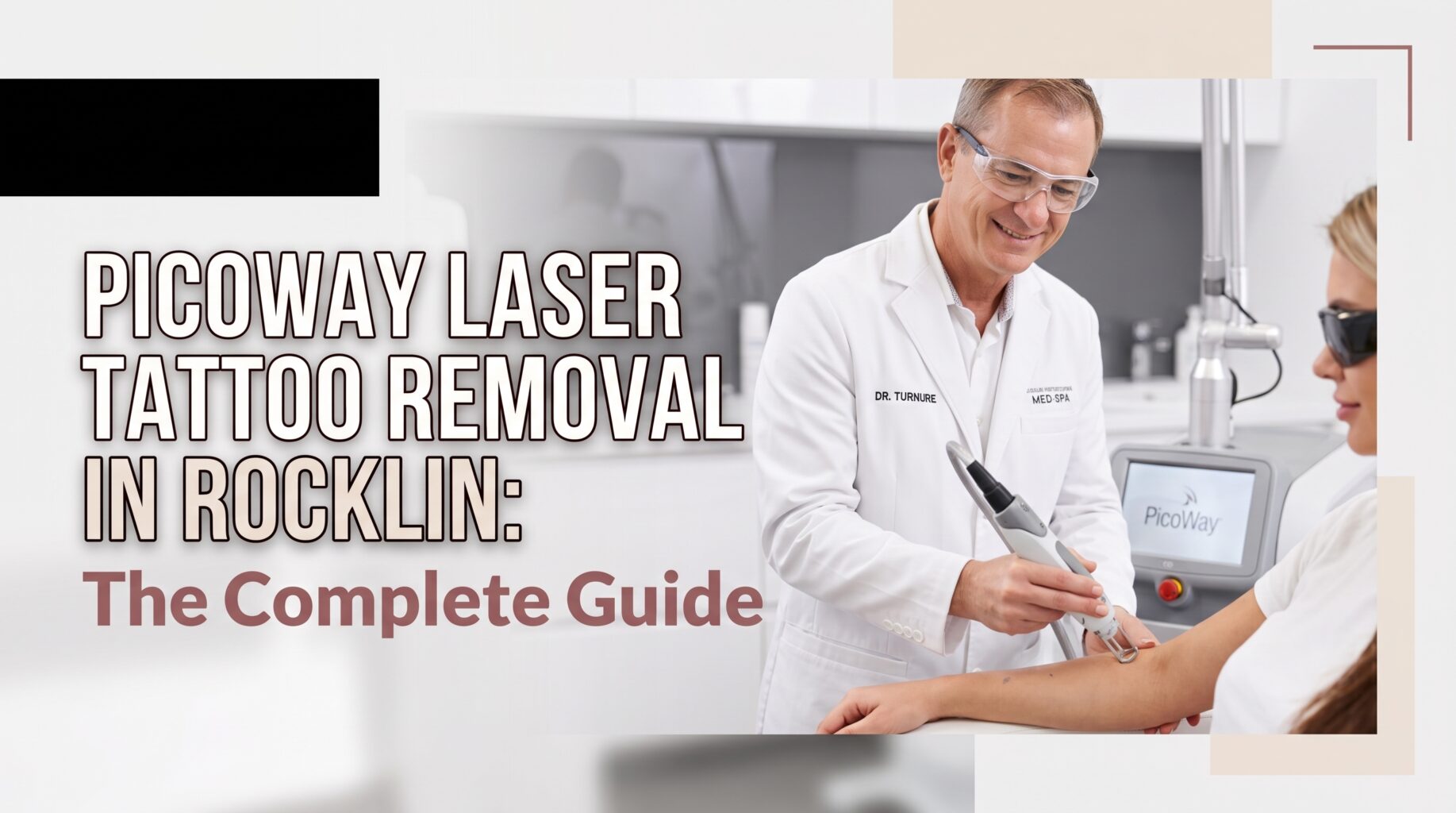
Medical oversight: Dr. Ray Turnure, MD, Medical Director, La Bella Vita Medi Spa (Loma Linda University, former Chief Resident in Family Medicine)
Key Takeaways
- Picosecond lasers like PicoWay deliver energy in trillionths of a second, creating a photoacoustic effect that shatters ink and pigment more precisely than older nanosecond technology.
- Nanosecond lasers rely on heat, which increases the risk of scarring, textural changes, and post-inflammatory pigmentation, particularly on darker skin tones.
- PicoWay is FDA-cleared for tattoo removal across all Fitzpatrick skin types (I-VI). La Bella Vita also offers PicoWay for other skin concerns, including acne scars, wrinkles, and pigmented conditions like melasma, covered in a separate guide.
- La Bella Vita Medi Spa in Rocklin uses the PicoWay system to treat a wide range of skin types and ink colors, including stubborn blues and greens, for patients throughout Rocklin, Roseville, Lincoln, and the greater Placer County area.
- Clinical data published by Candela, PicoWay’s manufacturer, shows 86% of tattoo patients achieved at least 50% ink clearance after just three treatment sessions. Below is an explanation of why the numbers are this strong.
If researching laser tattoo removal or skin rejuvenation has left you sorting through more technical jargon than you expected, this guide is meant to simplify that. The central question most people never think to ask is a simple one: how long is the laser pulse? That single variable, measured in either nanoseconds or picoseconds, determines how much heat enters the skin, how thoroughly pigment breaks down, and how quickly the body clears it. Here is what that difference means in practice.
The Advantages of Picosecond Pulses Over Nanosecond Technology
Laser pulse duration is not just a spec-sheet detail. It changes what happens inside the skin. Nanosecond lasers fire in billionths of a second. Picosecond lasers fire in trillionths of a second. That gap has measurable consequences for safety, comfort, and results.
Shorter pulses deliver energy more rapidly and precisely. The target, whether ink or pigment, absorbs it before surrounding tissue has time to react. The result is a mechanical shockwave rather than a heat-driven reaction: less collateral effect on surrounding skin, faster healing, and more effective clearance.
How Picosecond Pulses Work
Photoacoustic vs. Photothermal: The Key Distinction
Laser treatments generally work through one of two mechanisms. Nanosecond lasers are primarily photothermal. They heat the target until it breaks down. That heat is effective, but it does not stay contained. It spreads into surrounding tissue, which is where complications begin.
Picosecond lasers like PicoWay operate through a photoacoustic mechanism instead. The ultra-short pulse creates a rapid pressure wave that physically shatters pigment particles into microscopic fragments without relying heavily on heat. Those fragments are then cleared naturally by the body’s immune system. This approach minimizes thermal damage to surrounding tissue, which supports faster recovery and a more comfortable treatment overall.
Why Pulse Duration Determines Precision
The underlying principle is called selective photothermolysis: a laser pulse should be shorter than the time it takes a target to dissipate heat. Nanosecond pulses often push that boundary. Picosecond pulses stay well within it. The shorter the pulse, the less thermal energy spreads into adjacent skin cells, and the more precisely the laser affects only the intended target.
Where Nanosecond Lasers Fall Short
Thermal Damage, Scarring, and Textural Changes
Because nanosecond lasers generate more heat during treatment, surrounding skin absorbs more thermal energy than intended. Documented clinical concerns tied to this mechanism include:
- Scarring at or near the treatment site
- Textural changes, including a roughened or uneven appearance sometimes called a ghosting effect
- Prolonged redness and extended healing time
For patients who need multiple sessions, the cumulative thermal load on the skin becomes a real consideration.
The Risk Gap for Darker Skin Types
Melanin, the pigment that gives skin its color, absorbs laser energy. The more melanin present, the more competing absorption occurs during treatment. Nanosecond lasers, with their higher thermal output, carry a meaningfully higher risk of post-inflammatory hyperpigmentation (darkening) or hypopigmentation (lightening) in patients with Fitzpatrick skin types IV through VI.
Picosecond pulses reduce that thermal load substantially. PicoWay’s 1064 nm Nd:YAG wavelength penetrates deeper while minimizing melanin absorption in the upper layers of skin, which makes it a clinically appropriate option for darker complexions.
PicoWay’s Advantage in Laser Tattoo Removal
Addressing Stubborn Blues and Greens
Not all tattoo ink responds equally to laser energy. Red, black, and dark brown inks have traditionally been the easiest to remove. Blues and greens are more difficult. Their molecular structure makes them resistant to standard nanosecond wavelengths, and many patients have been told their tattoos cannot be fully cleared.
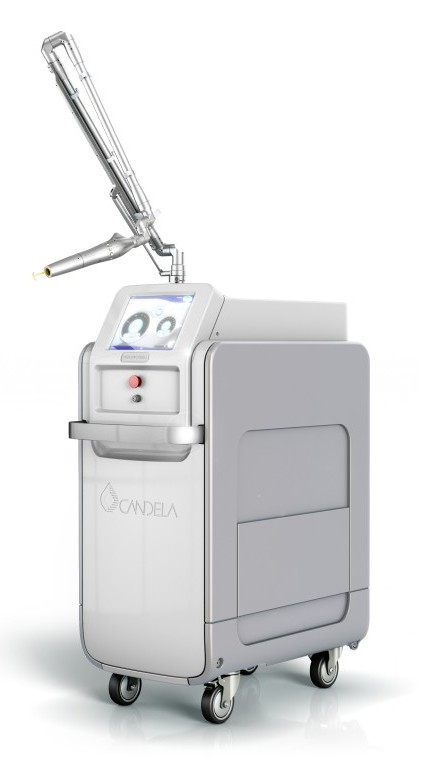
PicoWay addresses this with dedicated wavelengths, 730 nm and 785 nm, calibrated specifically for blue and green ink. Its 1064 nm wavelength also treats black, brown, blue, green, and purple inks across all Fitzpatrick skin types (I-VI). For patients who have already attempted removal with older technology and hit a wall, this combination is often the difference between partial results and full clearance. La Bella Vita’s tattoo removal service uses the PicoWay platform for this reason: it handles a broader range of ink colors than older Q-switched lasers.
Fewer Sessions, Faster Clearance
One of the most consistent findings in clinical use is that picosecond technology achieves meaningful clearance in fewer treatment sessions than nanosecond alternatives. Because the photoacoustic effect breaks pigment into smaller fragments, the immune system clears them more efficiently between sessions.
Clinical data from PicoWay’s FDA clearance studies shows 86% of patients achieved at least 50% tattoo clearance after three treatments (source: Candela clinical data). Most patients require 4 to 10 total sessions depending on tattoo size, ink density, color, and skin type, with sessions typically spaced 6 to 8 weeks apart to allow full immune clearance between visits. That is a meaningfully shorter timeline than the 10 to 15+ sessions historically associated with nanosecond Q-switched lasers.
PicoWay at La Bella Vita
The gap between nanosecond and picosecond laser technology is not incremental. It reflects a fundamentally different approach to how energy interacts with skin. Photothermal reactions heat and can damage. Photoacoustic reactions fracture pigment and let the body clear it. For anyone evaluating tattoo removal, that distinction has direct implications for how many sessions are needed, how the skin heals, and whether stubborn pigment gets fully addressed.
PicoWay’s combination of four picosecond wavelengths and multiple delivery configurations makes it one of the more clinically versatile picosecond platforms available for tattoo removal.
For patients with darker skin tones, previously treated resistant tattoos, or concerns about thermal damage, the choice of laser technology is a safety consideration worth discussing directly with a provider before committing to a laser tattoo removal treatment plan.
Ready to find out if PicoWay is right for your tattoo? Book a consultation →
To learn more about PicoWay and other laser treatments available under Dr. Ray Turnure’s medical direction, visit La Bella Vita Medi Spa, serving Rocklin, Roseville, Lincoln, and the greater Placer County area.